
Logging
-
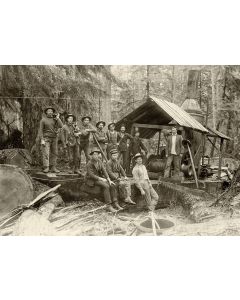 A. R. Vorhies Camp on the Upper Wynoochee River - c 1905As low as $5.00This image gives us a detailed view of a family-owned lumber camp, located on the Olympic Peninsula in Washington State. A close look shows us that many of the crew are quite young. Learn More
 -
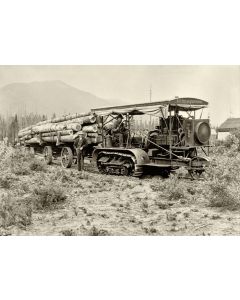 1913 Holt Track-type Tractor Hauling Logs - 1914As low as $5.00This U. S.Reclamation Service tractor was used to haul logs to the lake at Kachess Dam, in Kittitas County, Washington. Learn More
 -
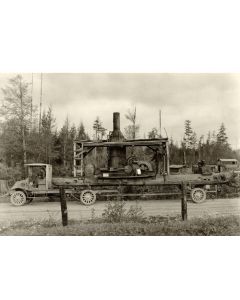 3 1/2 ton Kelly-Springfield Truck Hauling a Steam Donkey - c. 1917As low as $5.00While steam donkeys for logging were equipped with skids to allow them to be moved about in the woods, sometimes it was necessary to move them longer distances to new camps. Learn More
 -
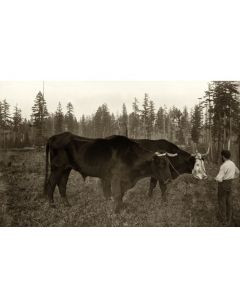 A Homesteader and his Oxen - circa 1885As low as $5.00Oxen were a popular choice as draft animals for both emigrants crossing the Oregon Trail and for early settlers in Oregon. Learn More
 -
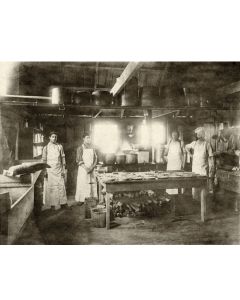 A Logging Camp Cook Shack - c. 1898As low as $5.00The pies are on the table in this unusual indoor photo of an early cook shack, created entirely from natural light. Learn More
 -
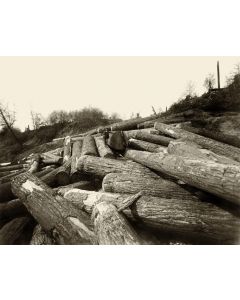 A Logging Foreman Admires his Crew's Output - c. 1898As low as $5.00Almost lost in the center of this giant pile of toothpicks is the foreman of the logging operation, posing on top of one of many large logs awaiting transport to a mill. Learn More
 -
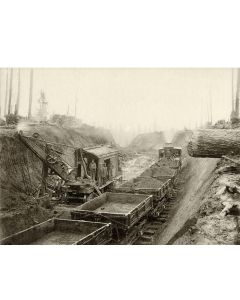 A Marion Steam Shovel, Simpson Logging Company, Near Seattle c 1905As low as $5.00This detailed image shows a cut being made through a ridge by the Simpson Logging Company, to be used for their logging railroad. Learn More
 -
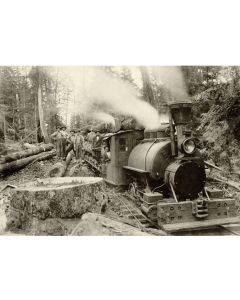 A Small but Mighty Logging Steam Engine - circa 1900As low as $5.00This logging engine appears to be partly hand-made by the logging company that utilized it - particularly the wooden components. Learn More
 -
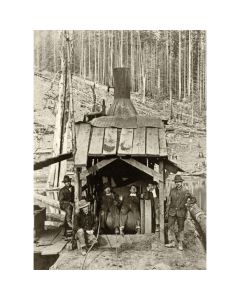 A Small Steam Donkey Near Sandy - c. 1910As low as $5.00Two loggers take it easy while reclining on the cable spools of a steam donkey in this postcard view of logging in the Sandy area. Learn More
 -
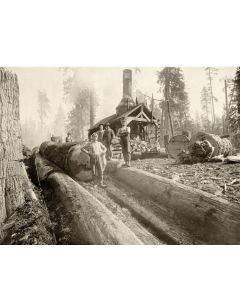 A Young Logger in a Log Chute - c. 1905As low as $5.00While not signed by Ford, the original for this photo was acquired with other similarly formatted photos that were signed by him. Learn More
 -
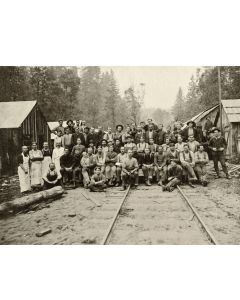 After Supper at Mack's Camp, Elma, Washington, c. 1905As low as $5.00A group of loggers poses on the tracks in their camp at Elma, in Grays Harbor County on the west end of Washington State. The size of the kitchen crew indicates they were well fed! Learn More
 -
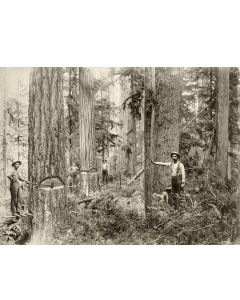 At Work in the Woods - c. 1898As low as $5.00Four men - and a dog - pose near medium-sized trees in an unknown location, probably on one side or the other of the lower Columbia River, where John F. Ford took many of his photographs. Learn More
 -
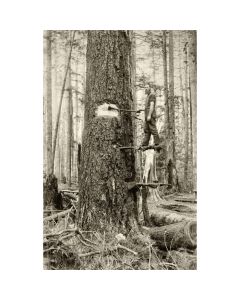 Beginning the Uppercut - circa 1885As low as $5.00This logging photo is a bit older than most, and is recreated from a boudoir card image printed and sold by Isaac G. Davidson - who at the time had arguably the largest photo business in Oregon. Learn More
 -
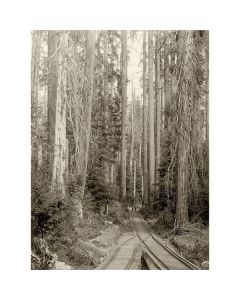 Benson Logging Railroad Through Tall Trees - c. 1905As low as $5.00Simon Benson was a technical innovator, and one of the first to use logging railroads rather than ox teams to haul his cut logs to the river. Learn More
 -
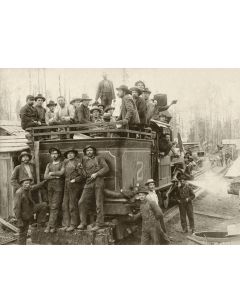 Bill Grisdale & Crew at Simpson's Camp No. 1, near Shelton - c. 1900As low as $5.00Bill Grisdale, in the white shirt standing beside the tender, was the nephew of Sol Simpson, who founded Simpson Logging Company in 1890. Learn More
 -
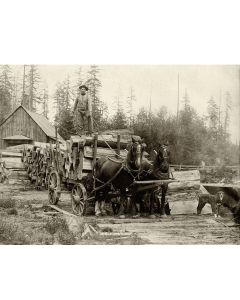 Bringing in a Load of Shake Bolts - circa 1910As low as $5.00This view by an unknown photographer shows an intermediate step in the making of shake shingles, as a load of shake bolts is either arriving or leaving the premises, pulled by a fine team with the supervision of the dog in the lower right. Learn More
 -
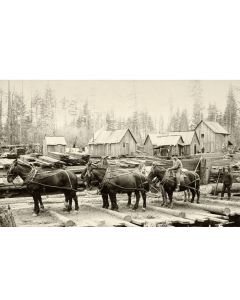 Bringing the Logs Back to Camp - c. 1900As low as $5.00Smaller logs are brought back to a logging camp by a team of six mules, pulling them along a skid-road of logs placed across the path. It appears that this logging camp also was home to a small sawmill, as stacked lumber can be seen behind the team. Learn More
 -
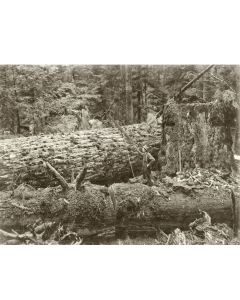 Bucker Ready to Crosscut a Ten-foot Diameter Fir - 1915As low as $5.00A logger hard at work bucking a huge ten foot fir stands on a smaller six-foot fir, which the caption on the original photo tells us was "a half-buried windfall which had been down more than a hundred years". Learn More
 -
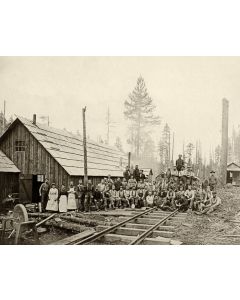 Camp No. 2, Yeon and Pelton Company - c. 1902As low as $5.00This group portrait of the logging crew at Camp 2 includes some other important people - the camp cook and several assistants. Learn More
 -
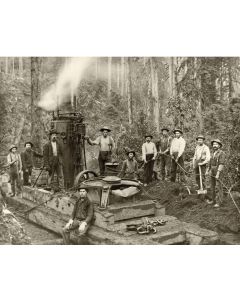 Capstan-style Horizontal Reel Steam Donkey - c. 1890As low as $5.00This is an early small steam donkey, similar to one on display at the Coos County Museum in North Bend. Learn More
 -
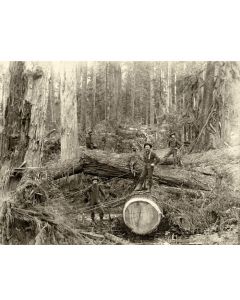 Choker Setters at Work, Deep in the Woods - c. 1898As low as $5.00Chokers are lengths of cable with a sliding bell that are wrapped around logs in the woods, to allow them to be pulled out to the yard. In the era of this photo, power was provided by a steam donkey. Learn More
 -
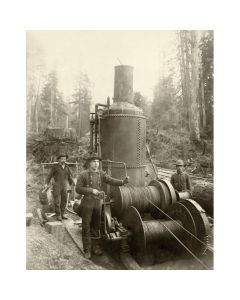 Closeup of a Double-drum Steam Donkey - c. 1898As low as $5.00Steam donkeys acquired their name from their origin on sailing ships, where the "donkey" engine was a secondary engine used to load and unload cargo, or raise the larger sails. Learn More
 -
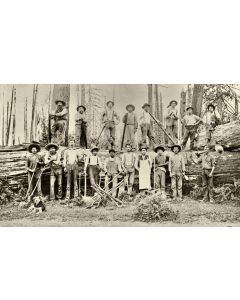 County Road Crew Near Hoodsport - c. 1895As low as $5.00At first glance this group portrait appears to be a very diverse logging crew, but a second look reveals that in addition to saws and peaveys, many shovels and grub hoes are visible. Learn More
 -
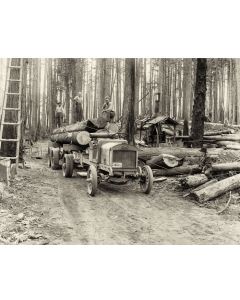 Crew with Early GMC 3 1/2 Ton Logging Truck - 1917As low as $5.00This 1917 photo shows a crew and their early GMC logging truck - one of the first GMC models to feature worm-drive (with a drive shaft) instead of chain drive. Learn More
 -
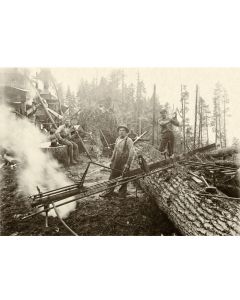 Crew with Steam Donkey Powered Dragsaw - c. 1900As low as $5.00This type of steam-powered crosscut saw, powered by a steam donkey, was called a dragsaw because it cut only on the drag stroke. Learn More
 -
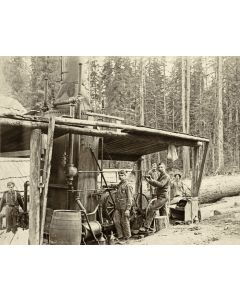 Double-drum Steam Donkey Crew - c. 1898As low as $5.00Taken at a different location than most of our John Ford logging photographs, this view gives us a good look at the men and equipment involved in steam-powered logging over a century ago. Learn More
 -
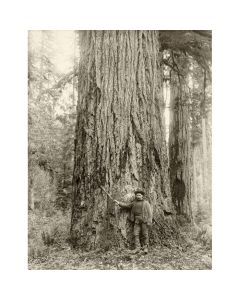 Douglas Fir, Twelve Feet in Diameter - c. 1898As low as $5.00Every Oregon photographer a hundred years ago needed to offer photos of people standing in front of giant trees. Learn More
 -
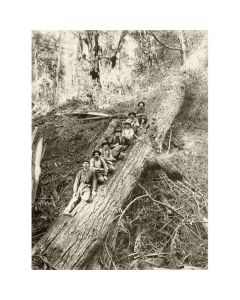 Eight on a Log - c. 1900As low as $5.00How many ways can you pose a group of loggers? John F. Ford is known for his gift of creating poses that are artistically and visually interesting. Learn More
 -
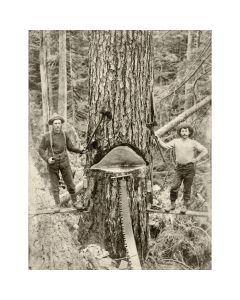 Falling Fir Trees - c. 1898As low as $5.00A crew of two pose next to a "medium-sized" Douglas Fir in this logging image from Ilwaco photographer John F. Ford. Learn More
 -
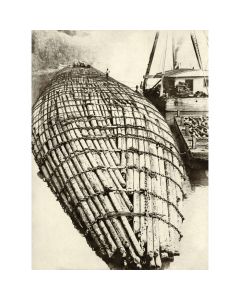 Finishing a Log Raft on the Columbia River - c. 1900As low as $5.00This well-composed view of a cigar-shaped log raft was taken by John Ford on the lower Columbia, the area where he created most of his photos. Learn More
 -
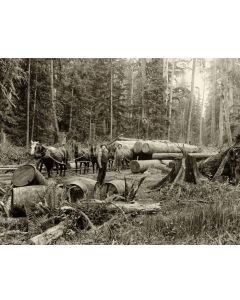 Hauling Logs on a Horse-drawn Wooden Railway - c. 1900As low as $5.00Horses had been used to pull railroad cars for at least a century when this photo was taken - in mines, for portage railroads, in cities for trolleys, and in the woods to haul logs. Learn More
 -
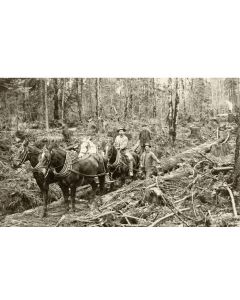 Hauling Logs out with Mules - c. 1900As low as $5.00Oxen and steam donkeys were the primary ways to bring logs out of the woods during this era, but mule teams and horses were sometimes used, especially for smaller logs. Learn More
 -
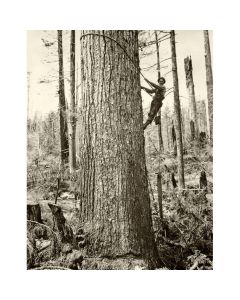 High Climber Axel Hallgren Scales a Spar Tree - 1921As low as $5.00This image of high climber Hallgren was taken near Knappa, Oregon at the camp of the Big Creek Logging Company. Learn More
 -
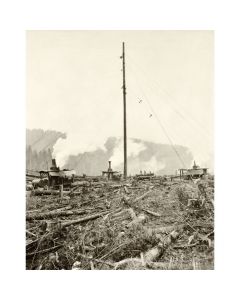 High Lead Spar Mast, Dempsey Lumber Co. - 1920As low as $5.00This image was captured by Seattle photographer John D. Cress, who specialized in logging scenes and billed himself as "the Forest Fotographer". Learn More
 -
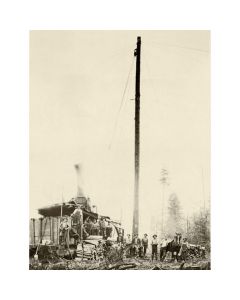 High-lead Yarding, Deer Island Logging Company - c. 1925As low as $5.00By the 1920s, high-lead logging had replaced ground-lead logging for many operations in the Pacific Northwest. Both utilized steam donkeys to power cables pulling logs to the yarding area. Learn More
 -
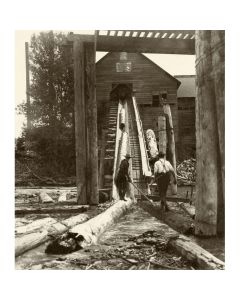 Hoisting Logs from Pond to Mill at Palmer - 1905As low as $5.00At the Palmer Mill uphill from Bridal Veil, logs from the pond were hoisted by a power conveyor to the second floor to be rough-cut into timbers as their first step towards becoming finished lumber. Learn More
 -
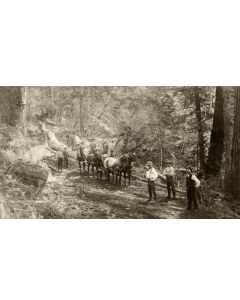 Horse Logging near Bridal Veil - 1890sAs low as $5.00The photographer's title "Logging Near Bridal Veil" probably refers to the Columbia Gorge logging town of Bridal Veil, rather than the waterfall. Learn More
 -
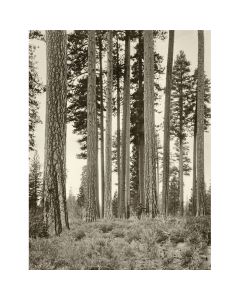 In the Ponderosa Near Klamath Falls - c. 1910As low as $5.00The original for this detailed image of a stand of Ponderosa was a large print that hung for many years in the Weyerhaeuser offices in Klamath Falls. Learn More
 -
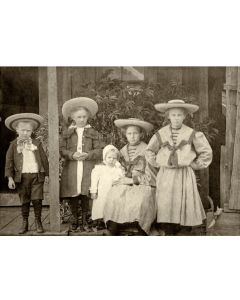 In Their Sunday Best - c. 1898As low as $5.00Five siblings line up on a rustic porch - likely in a logging camp - to pose for a family portrait. Their hats alone make the photo notable. Learn More
 -
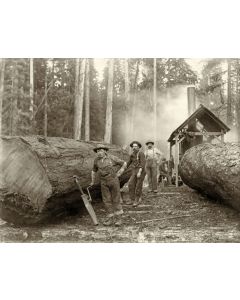 Jack Screw Men and Steam Donkey - c. 1898As low as $5.00The crew that uses the screw jacks to maneuver logs poses here in the yard in front of a covered steam donkey. Learn More
 -
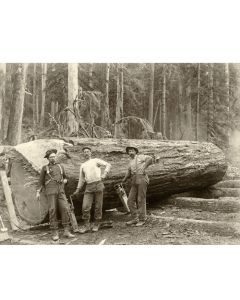 Jack Screw Men Yarding a Large Log - c. 1898As low as $5.00A very old logging tool, the jack screw was used to move heavy logs, either in the woods to position them for hauling by oxen (and later by steam donkeys), or in the yards to roll the logs into position. Learn More
 -
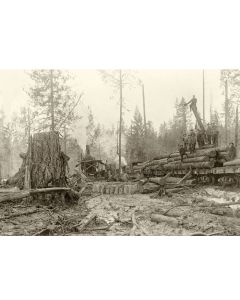 Loading a Log Train near Redmond - c. 1905As low as $5.00It looks pretty cold and damp in this scene of loading logs on railroad cars somewhere near Redmond in King County, Washington. Learn More
 -
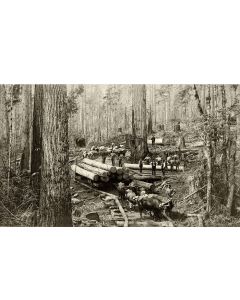 Loading Logs on a Railcar Pulled by Oxen on Wooden Tracks c. 1890As low as $5.00Not all logging railroads had steel tracks, or were pulled by steam engines. Here we see cars pulled along log rails by teams of oxen. Learn More
 -
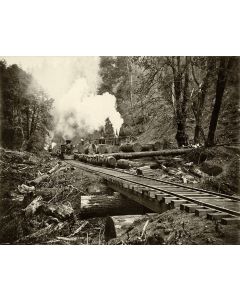 Loading Logs with 3 Steam Donkeys and a Steam Engine - c. 1900As low as $5.00Steam and smoke from the steam donkeys and the train engine create a wonderfully composed photo, and there's enough detail here to examine the machinery close up. Learn More
 -
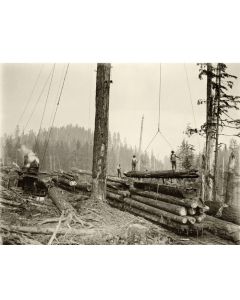 Loading Logs with a Spar Pole - c. 1925As low as $5.00High lead logging, using a spar pole, became common in the Pacific Northwest in the 1920s. Soon the pole was adapted to help load railroad cars with logs for the mills. Learn More
 -
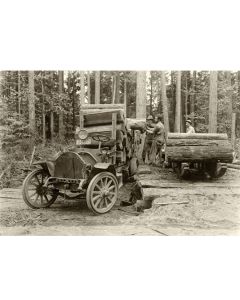 Loading Shingle Bolts on an Early Logging Truck - c. 1918As low as $5.00A 1918 license plate dates this photo of three men transferring shingle bolts from a skid to an early truck, somewhere in Washington state. Learn More
 -
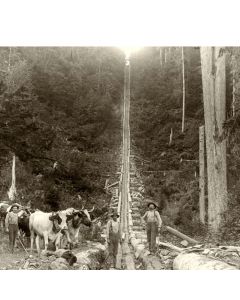 Log Chute with Ox Teams - 1890sAs low as $5.00The original title for this magic lantern glass slide was simply "Log Shute, Oregon, U.S.A." Learn More
 -
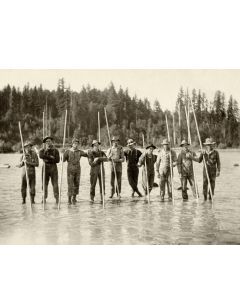 Log Drivers on the Cowlitz River - c. 1905As low as $5.00A group of log drivers, sometimes called "river hogs", pose with their pikes - the long poles used to maneuver logs as they moved down the river to sawmills. Learn More
 -
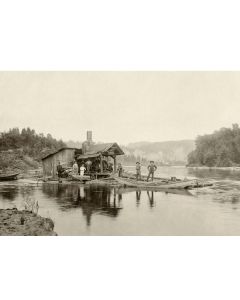 Log Drivers on their Wanigan, Cowlitz River - c. 1905As low as $5.00Log drivers helped maneuver log rafts down rivers to sawmills. Here a group poses in front of their wanigan, a floating kitchen that accompanied them on their journey. Learn More
 -
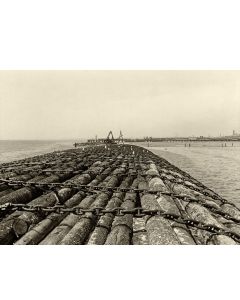 Log Raft from Oregon Arrives in San Diego - 1929As low as $5.00Most photos of sea-going log rafts show them being prepared to leave Oregon. This view shows a raft after it has arrived at its destination. Learn More